
Essential Tips for Effective Window Cleaning
Effective window cleaning combines suitable products, a consistent method and safe access. This Lucy & Phil guide to window cleaning for homes and businesses explains how to clean accessible glass, plan professional visits and compare quotations without overlooking important details. Whether you are tackling fingerprints at home or organising a commercial cleaning schedule, the aim is the same: clear glass, protected surfaces and a manageable routine.
What is the most effective way to clean windows?
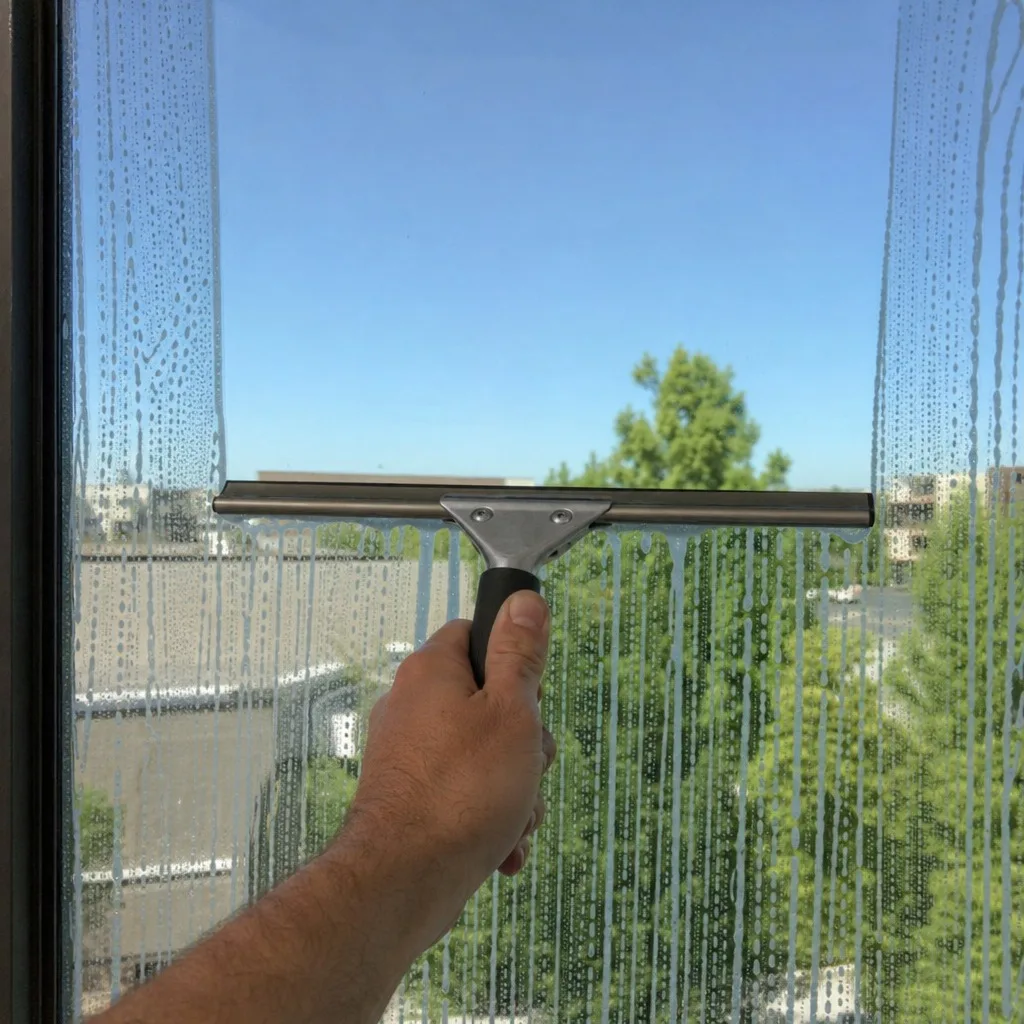
The most effective approach is to remove loose dirt, wash with a suitable non-abrasive solution and remove the liquid with a squeegee or clean, lint-free cloth. Start with the window manufacturer’s care instructions, particularly where glass has a specialist coating. Pilkington recommends clean cloths and clear, non-abrasive cleaners for ordinary glass, while Andersen’s guidance also supports mild cleaning solutions and careful drying. (pilkington.com)
Before reaching for a bottle, decide what you are actually trying to remove. A handprint on an interior pane needs a different response from an unknown deposit left after building work. If a mark does not lift with the approved routine method, stop rather than escalating to a stronger chemical or abrasive tool.
Keep your first attempt simple. Clean one accessible pane, let it dry and inspect the result before repeating the process across the property. This gives you a chance to check the product, cloth and technique without committing every window to an unsuitable treatment.
For larger jobs, divide the building into sensible areas. Finish a room or section before moving elsewhere, and keep track of windows that need specialist attention. A repeatable process is more useful than rushing between panes and trying to remember which edges still need drying.
The same principle applies when hiring window cleaners: agree the expected result and the surfaces included, rather than assuming that everyone interprets “a window clean” in the same way.
Choose tools and window cleaning solutions carefully
For ordinary, safely accessible windows, assemble a modest kit rather than a cupboard full of products. Suitable basics include soft cleaning cloths, an approved cleaning solution and a squeegee. Andersen lists these items in its routine glass-cleaning guidance; check your own window manufacturer’s instructions before choosing equivalents. (helpcenter.andersenwindows.com)
Keep your equipment organised around separate tasks:
Washing: use a clean, soft applicator reserved for glass rather than a cloth already used on gritty outdoor surfaces.
Removing liquid: choose a manageable squeegee that fits the panes you are cleaning, or use an approved lint-free drying cloth.
Finishing edges: keep a separate cloth available for corners and frame edges so you are not trying to finish with a saturated washing cloth.
Protecting the room: place a suitable covering beneath the work area and move nearby belongings before introducing water.
Checking products: retain the label and care instructions so you can confirm suitability instead of relying on an unmarked bottle.
When comparing window cleaning solutions, treat compatibility as the deciding factor. A product intended for ordinary glass is not automatically suitable for every film, coating, seal or surrounding finish. Marvin advises using approved cleaning products and non-abrasive applicators, and checking that abrasive particles are absent before cleaning. (marvin.com)
Avoid turning a difficult mark into an experiment. If the glazing type is unknown, ask the installer or manufacturer for guidance. The practical benefit is straightforward: you can explain exactly what has been used if professional advice becomes necessary.
Follow a consistent cleaning sequence
A clear sequence makes it easier to spot missed areas and judge the finish. For accessible windows, use the following routine alongside the product and glazing manufacturer’s instructions. Andersen’s cleaning guidance recommends working from the top, using a suitable solution and removing it with a squeegee or clean cloth. (andersenwindows.com)
Prepare the area. Move ornaments, paperwork and electrical equipment away from the window. Position your supplies where you can reach them without stretching across furniture or repeatedly carrying a wet cloth through the room.
Inspect before washing. Look for cracked glass, loose fittings, lifting film or an unfamiliar coating. Set aside anything that needs advice rather than including it automatically in the routine clean.
Remove loose debris appropriately. Follow the manufacturer’s directions for the surface involved. Do not drag a dirty applicator from an outdoor sill straight across the glass.
Wash a manageable section. Apply the approved solution with a clean, soft applicator. Work on an area you can finish comfortably rather than wetting several windows and returning to them later.
Remove the cleaning liquid. Use the approved drying method, taking particular care near edges. Give yourself space to complete each pass rather than twisting around objects left on the sill.
Finish and inspect. Deal with remaining moisture around the edges using a separate cloth. Check the pane from more than one position before packing away.
For your first few windows, favour control over speed. You do not need an elaborate professional hand movement to establish a useful routine. Choose a straightforward pattern and repeat it consistently so that an unfinished section is obvious.
Where possible, choose a cloudy day or work away from direct sunshine. Andersen notes that cleaning in direct sunlight can cause streaking or allow cleaning products to dry on the glass. If conditions change midway through the job, move to another elevation or postpone the remaining panes. (helpcenter.andersenwindows.com)
Finally, separate cleaning from repairs. Make a note of damage or a persistent unexplained mark instead of repeatedly scrubbing it. Your record should describe the location, what you tried and whether the appearance changed.

Match traditional window cleaning to the property
Traditional window cleaning generally uses a washing applicator and squeegee to clean and dry the glass. A water-fed pole system instead delivers purified water through a brush on an extending pole. These are different approaches, and the appropriate choice depends on the glass, access and work involved. (parts.andersenwindows.com)
If you search for “traditional window cleaning near me”, explain why you prefer that method. Perhaps you want an interior clean, have small individual panes or would like the cleaner to discuss an awkward detail at close range. Describe the requirement rather than assuming the search phrase communicates everything.
Ask the provider to explain the proposed method for each part of the property. A quotation might involve one approach for accessible interiors and another for exterior glazing. The useful question is not which method sounds more professional, but how the proposed approach suits your windows.
A search for a “traditional window cleaner near me” should not become a request for unnecessary ladder work. HSE advises avoiding work at height where reasonably practicable, including through cleaning from inside or using telescopic water-fed poles. Access should follow the assessment of the job, not a preference for familiar-looking equipment. (hse.gov.uk)
For either method, agree what happens after cleaning. Ask whether you should inspect immediately, wait until the glass has dried or report any concern through a particular contact. Clear expectations make it easier to distinguish unfinished work from an issue that needs a separate treatment.
Keep exterior window cleaning within safe limits
Exterior window cleaning needs an access plan before it needs a bucket. HSE identifies height, ground conditions, obstructions, nearby power lines, weather and public access as relevant considerations when planning window cleaning. Where work at height cannot be avoided, suitable equipment and competent people are essential. (hse.gov.uk)
For householders, a sensible boundary is to tackle only windows you can clean comfortably from a safe position. Do not improvise a platform from furniture, climb onto a conservatory roof or lean out to reach a stubborn corner. Leave an inaccessible pane unfinished and arrange a suitable professional assessment instead.
Before a booked exterior visit, make access information easy to understand. Tell the cleaner about locked side gates, narrow passages, delicate planting and any area they should avoid. If the rear of the property can only be reached through the house, disclose that when requesting the quotation.
For business premises, identify who will coordinate the visit and how entrances will remain usable. Ask the contractor to explain the working area, equipment position and arrangements for pedestrians. Treat these as practical planning points rather than paperwork to collect after arrival.
Weather should also be part of the conversation. Agree how postponements will be communicated, who decides whether work can proceed and how the next appointment will be arranged. A revised visit is preferable to pressure to continue in unsuitable conditions.
Avoid making the appointment unnecessarily difficult: have the correct keys available, confirm any restricted areas and tell the cleaner about changes since the quotation. A new delivery bay, temporary scaffold or building project may require the original plan to be reconsidered.
How often should home and business windows be cleaned?
There is no single cleaning interval that suits every home or business. Set an initial schedule around the appearance you need, the windows included and the practicalities of access, then review it against the actual result. A customer-facing entrance may justify different attention from a rarely used rear room.
Instead of choosing a frequency without a clear reason, inspect a few representative windows between visits. Note where visible marks return, which areas remain acceptable and whether the agreed service addresses the problem. Use those observations when discussing the next booking.
Build your schedule around three groups:
Presentation priorities: identify windows that matter most to your view, reception area or shop display. Give these a clear standard rather than assuming every elevation needs identical attention.
Routine maintenance areas: include the remaining agreed glazing in a predictable cycle, with enough notice to arrange access and prepare interiors.
Occasional additional work: discuss post-building cleaning, difficult deposits or unusual access separately rather than quietly adding them to a routine appointment.
At home, decide whether you want an exterior-only arrangement or occasional interior visits as well. For a business, consider opening hours, meeting-room bookings and other contractors when choosing the appointment pattern.
Review the arrangement after several visits rather than treating it as permanent. If some areas need more attention and others need less, ask for an adjusted scope. The aim is a schedule you can justify, not simply the most frequent option available.
Keep a simple record of completed visits and any exceptions. It gives both sides a practical reference when discussing changes, missed access or recurring concerns.
Tailor commercial window cleaning to the workplace
Commercial window cleaning should begin with a usable description of the building and its daily operation. When comparing commercial window cleaning services, explain which spaces must remain available, who uses the premises and what access restrictions apply. Ask prospective commercial window cleaners to respond to those details rather than providing only a headline figure.
A search for “commercial window cleaning near me” can create a shortlist, but the next conversation should be specific. Share photographs, approximate building layout and the areas you want included. Where access or scope remains uncertain, request an assessment before treating a quotation as final.
Office windows and occupied rooms
For office window cleaning, prepare a room-by-room scope covering external panes, internal glass and any partitions you want included. Ask whether meeting rooms, reception glazing and glass doors are part of the same service or separately priced. Do not assume that an exterior quotation includes interiors.
Give office window cleaners a named contact and a realistic arrival procedure. Explain sign-in requirements, restricted rooms and arrangements for moving personal belongings. Staff should know in advance whether they need to clear desks or windowsills.
When comparing office window cleaning services, ask how inaccessible rooms are recorded and revisited. Office building window cleaning is easier to manage when the completion record identifies exceptions instead of simply marking the whole building as finished. This also gives you something concrete to review with the contractor.
Retail glazing and customer access
For retail window cleaning, define the shopfront carefully: display windows, entrance doors, internal display glass and external signs are not necessarily one item. Explain where displays sit close to the glass and who is responsible for moving them. Agree how promotional films or decorative finishes will be identified before work begins.
Plan the appointment around customer access and deliveries. If opening-time cleaning is unavoidable, ask how the proposed working area will be managed. Include a contact who can resolve an access issue without leaving the cleaner waiting outside.
Larger buildings and corporate arrangements
Corporate window cleaning needs a clear boundary between a standard service specification and individual site requirements. For commercial building window cleaning, list each elevation and any excluded glazing so that completion can be checked against something definite. If several occupiers share a building, establish who can authorise access and approve changes.
Business window cleaning enquiries should also distinguish the location from the scope. If you are looking for commercial window cleaning in London, for example, provide the actual site details and any known arrival restrictions. A broad location alone does not explain the property or establish that a particular provider serves it.
How should you compare window cleaning prices?
Compare window cleaning prices against the same written scope, not just the amount at the bottom of each quotation. Ask each provider to identify the windows covered, the proposed method, the visit frequency and any exclusions. Without those details, you cannot tell whether two quotations describe the same job.
Use a comparison checklist before accepting:
Surfaces: confirm inside or outside glass, frames, sills, doors and any other requested glazing.
Initial condition: ask whether the quotation covers the present condition or assumes a routine maintenance clean.
Access: record the proposed approach and clarify how any additional access arrangements will be priced.
Frequency: distinguish a one-off appointment from a recurring service and check what changes if the schedule changes.
Additional work: request separate agreement for unusual deposits, builder’s residue or glazing outside the original scope.
Payment: confirm the total payable, any applicable tax, invoice arrangements and payment timing.
For commercial window cleaning prices, ask for a breakdown that reflects how you will manage the service. Separate sites, elevations or visit types where that helps you approve work and understand invoices. The breakdown need not be complicated, but it should make variations visible.
Avoid using an unsupported online average as a substitute for a property-specific quotation. Instead, send the same information to each shortlisted provider and invite questions. If one quotation is noticeably different, ask which assumptions explain the difference rather than immediately accepting or rejecting it.
Finally, compare the handling of exceptions. Ask what happens if a window cannot be reached, a room is locked or extra work becomes apparent. A clear process gives you a more useful basis for choosing than an attractive figure with unclear boundaries.
Find local window cleaners with the right fit
Typing “window cleaning near me” is a useful starting point, but proximity should only begin the selection process. Build a shortlist and then ask each provider about your actual property, preferred schedule and required scope. Keep their answers together so you can make a direct comparison.
Search phrases such as “local window cleaners near me” and “window cleaners in my area” express a location preference, not a complete specification. Add the practical details: home or workplace, approximate layout, internal or external cleaning, and any access concerns. Ask the provider to confirm coverage rather than assuming a search result guarantees availability.
Some listings use the term “local window washers” instead. Whichever wording you encounter, apply the same checks: establish who will attend, how quotations are confirmed and how you can raise a concern. Look for relevant information about work resembling yours rather than relying only on general praise.
If you prefer a smaller provider, a search for “independent window cleaners near me” can help you explore that option. Ask about communication, planned absences and how appointments are rearranged. For a larger team, ask how site instructions reach the person carrying out the visit.
Before appointing anyone, consider requesting:
A written scope that matches your enquiry and identifies exclusions.
Confirmation of relevant insurance and whether it covers the proposed work.
An explanation of the cleaning and access methods intended for your property.
Clear appointment, cancellation and payment arrangements.
A named route for reporting unfinished work or damage concerns.
These questions are not an invitation to demand unrelated documents. Keep your checks proportionate to the job and ask for clarification where an answer is unclear. Most importantly, do not let a friendly conversation replace a written agreement about what you are buying.
Make recurring contracts easy to manage
When appointing contract window cleaners, turn the accepted quotation into a practical service record. Include the address, scope, frequency, contact details and agreed arrangements for access. Attach marked photographs or a simple glazing list if they make the boundary of the work clearer.
Set a completion process that suits the premises. A householder might need a visit notification, while a facilities contact may want a record of completed areas and exceptions. Decide who receives this information and where it will be kept.
Agree the response to problems before one occurs. Specify how concerns should be reported, who reviews them and how any return visit will be arranged. Distinguish a missed section from an additional task that was never included in the contract.
Keep changes visible. If you add internal partitions, alter the visit frequency or introduce a newly occupied floor, request written confirmation of the revised scope and price. Do not rely on an informal conversation being remembered months later.
A short review after the first few appointments is worthwhile. Use it to check access, timing and completion records, then adjust anything that is not working. The purpose is a service both parties can follow without repeatedly renegotiating the basics.
A note for people exploring window cleaning jobs
If you arrived while searching for “window cleaning jobs near me”, your next step is different from a customer’s: assess the role and employer, not the cleaning quotation. Ask what the duties involve, which equipment is used and how training and supervision are organised. Do not assume every vacancy involves the same type of property or access method.
When comparing window cleaning jobs, clarify whether the position is employed or self-employed, how travel is handled and what equipment is supplied. Ask for the working arrangements and pay basis in writing. This article does not advertise vacancies or establish that Lucy & Phil is recruiting.
For window cleaner jobs involving work at height, competence must match the task. HSE explains that the skills needed for ground-floor cleaning differ from those needed for activities such as abseiling. Ask how the employer assesses that competence and what training is provided before unfamiliar work begins. (hse.gov.uk)
A final check before the next clean
Before doing the work yourself or booking a provider, run through four points: identify the glazing, confirm the approved method, establish safe access and define what is included. For a professional visit, add written pricing and a clear way to report concerns.
Good window cleaning is not about using the strongest product or choosing the cheapest quotation. It is about matching the method to the property and following through consistently. Start with one clearly defined job, inspect the result and use what you learn to shape the next visit.
Lucy & Phil Property Solutions
Professional facilities management, commercial cleaning, property maintenance, and construction support across the UK.