
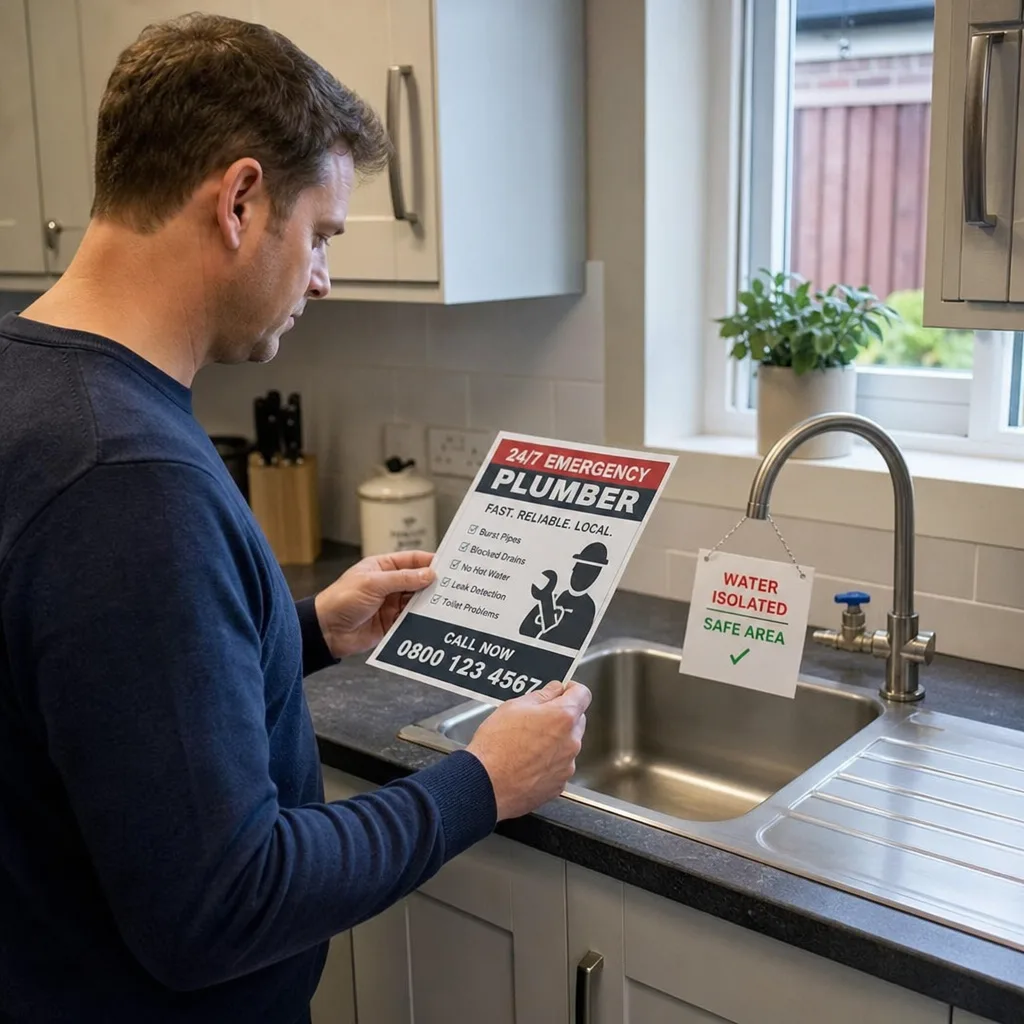
Finding Reliable Emergency Plumbing Services Nearby
Finding reliable emergency plumbing services means checking three things quickly: whether the plumber can attend, whether they are suitable for the problem, and what you will pay. When you search for ‘emergency plumbing services near me’, use the results as a shortlist rather than an automatic recommendation. This guide explains how to protect your home, compare available plumbers and agree to repairs without letting urgency replace sensible checks.
What counts as a plumbing emergency?
Treat a plumbing problem as an emergency when water or wastewater is escaping uncontrollably, essential facilities cannot be used safely, or the situation presents an immediate safety concern. A burst supply pipe and sewage backing up indoors deserve prompt professional attention. Keep away from water near electrical equipment and avoid contact with sewage. (weather.metoffice.gov.uk)
The practical question is not simply whether something has broken. Consider whether you can safely contain the problem and manage without the affected fixture until an ordinary appointment. When calling, explain what is happening now rather than relying on the word ‘emergency’ to communicate the severity.
For example, describe whether water is still flowing, whether you have isolated the supply and whether the property has another usable toilet. Mention anyone whose care or accessibility needs make a loss of facilities especially difficult. These details help the person taking your call understand your circumstances.
Use the following as a triage checklist, not a remote diagnosis:
Uncontrolled escape of water: explain where it is coming from, how quickly it is spreading and whether you can reach the shut-off valve safely.
Wastewater backing up: say which fixtures are affected and whether sewage has entered occupied rooms.
Water near electrics: keep clear and tell the provider immediately; electrical assistance may also be necessary.
Loss of essential facilities: explain whether the whole home is affected and what alternatives are available.
A contained fault: describe how it has been isolated and ask whether an urgent daytime visit would be appropriate.
If there is immediate danger to anyone, prioritise emergency assistance rather than continuing to compare plumbing businesses. Never enter standing water to reach an electrical switch or appliance. (cdc.gov)
Protect your home before making calls
Your first objective is to reduce exposure to the problem, not attempt an unfamiliar repair. For a burst supply pipe, turning off the incoming water at the property's stop valve is a recommended first step. Only attempt this if the valve is safely accessible and you know what you are operating. (appgateway-ukwest.scottishwater.co.uk)
If water is close to sockets, lights or appliances, do not touch affected equipment. Do not cross standing water to reach the electrical panel. Ask a qualified electrician for help if you cannot isolate electricity safely, and do not restore power to wet equipment before it has been checked. (cdc.gov)
For sewage, keep people away from the contaminated area and avoid direct contact. A plumbing repair and a sewage clean-up are separate tasks, so ask whether professional cleaning will also be needed. Your local health or wastewater authority may be able to provide guidance. (epa.gov)
While arranging assistance, take these practical steps where safe:
Identify the affected area. Note the room, fixture and visible source without opening equipment or dismantling pipework.
Record what happened. Write down when you noticed the problem and whether it is getting worse.
Take useful photographs. Capture both the close-up fault and a wider view that shows its position.
Clear a safe route. Move loose belongings out of the access route, without entering contaminated or electrically hazardous water.
Keep your phone available. Make sure the plumber can reach you with questions or an arrival update.
Avoid adding drain-cleaning chemicals while waiting for advice. Many drain cleaners contain corrosive substances; if you have already used one, tell the plumber the product name and when you applied it. Do not treat a chemical product as a harmless detail when explaining previous attempts to clear the blockage. (poison.org)
You do not need to identify the exact technical fault before calling. ‘Water is dripping through the kitchen ceiling beneath the bathroom’ is more useful than guessing which hidden fitting has failed.
How do you find trustworthy emergency plumbers nearby?
Find trustworthy emergency plumbers by combining local searches with independent checks of business identity, relevant credentials, insurance and written terms. Recommendations from people you trust can help create a shortlist, but check the provider yourself before authorising work. Consumer protection guidance recommends checking licensing and insurance, reading reviews critically and obtaining written estimates. (consumer.ftc.gov)
A search for ‘plumbing companies near me’ is a starting point. Open the business website or listing and look for enough information to make a useful call: the business name, contact details, service area and the types of work offered. Save the details of the provider you actually contact so that you can compare them with the booking confirmation.
Ask whether you are speaking directly to the plumbing business or to a booking service. If another company will attend, request its name before agreeing. Your aim is to establish who will arrive, who will invoice you and who will handle any follow-up.
Do not assume that a nearby address guarantees immediate availability. Ask for an attendance window for your location and describe the fault before accepting it. Also clarify whether the person answering is confirming an appointment or merely passing your enquiry to someone else.
Use recommendations selectively. Rather than asking a neighbour whether their plumber was ‘good’, ask what work was done, whether the final bill matched the agreed scope and how the business handled questions afterwards. A recommendation becomes more useful when you understand the experience behind it.
If the immediate risk is controlled, compare more than one provider. If it is not, focus on a shorter set of checks: identity, suitability, attendance, initial charges and permission before additional work. The purpose is to make a sound decision promptly, not conduct an exhaustive survey while water continues to escape.

Match the plumber to the problem
When making enquiries, ask about the specific work rather than whether the business handles ‘all plumbing’. Give the provider an opportunity to explain its limits. For a blocked toilet, ask about toilet and drainage work; for a leaking hot-water appliance, describe the appliance and ask whether a suitably qualified specialist is required.
Avoid assuming that a plumbing qualification covers every associated task. Check the credentials required for the actual work through the relevant local authority or official register. In the United States, the FTC advises checking a contractor's licence with state or county government and asking for proof of insurance. (consumer.ftc.gov)
If you search for ‘plumbing contractors near me’, narrow the enquiry immediately. Say whether you need an urgent repair, a drainage investigation or a larger replacement project. Ask whether the attending person has experience with that category of work and whether any specialist equipment or subcontractor might be needed.
For a search such as ‘repair plumber near me’, make the repair scope equally clear. Explain whether the leak is visible, whether a fixture has already been removed and whether access involves a wall, floor or shared service cupboard. Do not promise access that you cannot authorise.
If you have a septic system, mention it at the start. Sewage backing up into a property with an onsite wastewater system warrants advice from an appropriate professional; the EPA also recommends contacting the local health department or regulatory agency for guidance. (epa.gov)
Try this wording: ‘The downstairs toilet is backing up, the shower is also draining poorly, and we have stopped using those fixtures. Is this work your attending plumber handles, and what would the initial assessment involve?’ It gives the provider something concrete to respond to without presenting a guessed diagnosis.
Check identity, insurance and customer feedback
Before booking, ask for the full business name and the name that will appear on the invoice. Request evidence of insurance and verify relevant licensing through the appropriate official source. FEMA's contractor-fraud guidance recommends researching providers, checking insurance and being cautious when a contractor will not supply written documents. (fema.gov)
Keep your checks proportionate to the situation, but do not replace them with reassurance such as ‘we are fully covered’. Ask what evidence the business can send and save it with the booking details. If a different company or individual arrives, clarify the relationship before allowing work to begin.
Read customer feedback with a specific purpose. Look for accounts of comparable emergency repairs and details about communication, agreed charges and follow-up. Treat an overall rating as one input, not the whole decision; the FTC specifically advises reading reviews critically. (consumer.ftc.gov)
A useful review-checking approach is to ask:
Does the reviewer describe an actual job, or only offer general praise?
Is the work similar enough to inform my decision?
What does the account say about explaining costs and obtaining approval?
If a problem occurred, how did the business respond?
Can I verify the business independently of this review platform?
Do not expect perfect feedback or interpret one disagreement as a complete picture. Instead, use anything concerning as a question for the business. For example: ‘How do you agree extra charges if the original repair becomes more complicated?’
Keep a clear distinction between an identifiable provider and a provider you have fully assessed. A professional-looking website may help you find contact details, but your decision should rest on the checks and answers you obtain.
How much should an emergency plumbing visit cost?
There is no single useful price for an unspecified emergency plumbing visit. Ask the provider to explain the attendance charge, diagnostic work, labour basis, parts and any additional fees before booking. Compare written descriptions of the same work rather than relying on a headline figure; official consumer guidance recommends itemised written estimates when comparing contractors. (myfloridacfo.com)
Start with the initial commitment. What will you owe for the plumber to attend and assess the fault, even if you decide not to proceed? Then establish how the repair will be priced after assessment and at what point you will be asked to approve it.
Use this checklist to make competing answers easier to compare:
Cost item What to clarify Attendance Is there a separate call-out or travel charge? Assessment What investigation is included in the initial fee? Labour Is the work priced hourly, in time blocks or as an agreed task? Parts Are materials included, estimated or charged separately? Equipment Does specialist equipment carry an additional charge? Timing Does the stated rate change outside ordinary working hours? Access Who pays for opening and restoring walls, floors or panels? Follow-up Is a return visit included or separately chargeable? Total Are applicable taxes and other charges included?
Do not assume an initial estimate authorises every possible repair. Set a clear approval boundary: ‘Please contact me before undertaking work beyond the agreed assessment and making-safe scope.’ If you cannot remain at the property, agree how that approval will be obtained.
Where the fault is not yet understood, ask the provider to separate investigation from repair. You can then decide whether to authorise a limited assessment, a temporary measure or a permanent solution. This is a practical way to keep your instructions clear without demanding a diagnosis over the telephone.
For a substantial proposed replacement, ask what evidence supports it and what alternatives have been considered. If the immediate problem has been controlled, consider obtaining another written assessment before committing. Do not let the original emergency become automatic approval for a much larger project.
Finally, request payment terms before work begins. FEMA recommends avoiding full payment upfront and establishing a payment schedule tied to completed work. Keep copies of the agreement, any approved changes and your payment record. (fema.gov)
Make the first phone call count
A focused description can prevent an unproductive conversation. Before ringing, put your address, contact number, access information and a short account of the fault in one note. Include what you have already done, particularly whether the water is isolated and whether any chemicals have been used.
Avoid sending a long history before describing the present problem. Start with the immediate condition, then explain relevant background. ‘The pipe is still spraying water’ should come before the story of a tap replacement several months earlier.
You can use this call script:
‘I need help at [address]. The problem is [visible symptoms], and it started [when noticed]. We have [steps already taken]. Can you attend, what is the initial charge, and will you confirm the scope and further costs before starting repairs?’
Follow with practical booking questions. Ask who is attending, what arrival window is being offered and whether you will receive a confirmation. Explain parking restrictions, locked communal entrances, pets or any access needs that the visitor should know about.
If you are arranging plumbing work near me for someone else, identify the decision-maker clearly. Tell the provider who can approve charges, who will open the property and which telephone number to use. Do not leave a relative or neighbour unexpectedly responsible for authorising a repair.
Before ending the call, repeat the agreement in plain language. For example: ‘I understand the initial fee covers attendance and assessment, and you will ask me before carrying out chargeable repair work.’ Ask the business to confirm that understanding in writing.
Give blocked toilets particular care
If you are searching for a ‘blocked toilet plumber near me’, explain more than the fact that the toilet will not clear. Tell the provider whether the bowl is close to overflowing, whether wastewater has escaped and whether other fixtures are affected. Difficulty flushing, slow drainage and unpleasant drain smells are recognised signs of a blockage. (thameswater.co.uk)
Stop using affected fixtures while seeking advice rather than repeatedly testing them. Ask the plumber what information would help determine the appropriate attendance. Do not remove the toilet, open inspection chambers or start using unfamiliar equipment just to provide a more technical description.
Mention previous episodes and attempted remedies. If someone cleared the toilet recently, give the date as accurately as you can and explain what happened afterwards. If a chemical cleaner has been used, provide the product details before anyone starts work. (poison.org)
Ask whether the booking is for clearing the immediate obstruction, investigating its cause or both. If further inspection is recommended, request an explanation of what question it is intended to answer and what it will cost. Keep the immediate service and any additional investigation distinct in your approval.
Where several homes appear affected, check with your wastewater provider as well as a private plumber. Responsibility for public sewers and private drainage depends on the local arrangements, so ask before authorising work on shared or external infrastructure. Thames Water, for example, distinguishes private drainage responsibilities from problems in its public sewer network. (thameswater.co.uk)
Know what you are authorising during the visit
When the plumber arrives, confirm the business identity and briefly walk through the symptoms again. Show the relevant photographs and explain anything that changed after the booking. Then ask for the proposed next step before treating the whole visit as an open-ended instruction.
For any plumbing fix, distinguish between stopping the immediate problem and completing the permanent repair. Ask directly: ‘Will this leave the system fully repaired, or is it a temporary measure?’ Record the answer and any restrictions on using the affected fixture.
Before agreeing to additional work, request a clear description, price basis and explanation of any exclusions. Written estimates should identify the work, materials, timing and price, according to FTC consumer guidance. Keep later approvals alongside the original agreement rather than relying on memory. (consumer.ftc.gov)
Useful handover questions include:
What fault did you identify, and what work did you complete?
Is anything still isolated, disconnected or awaiting a part?
What can we safely use now?
What further visit or separate trade is required?
What should we do if the symptoms return?
What written record and warranty terms will we receive?
Ask to be shown the relevant controls and the repaired area where access is safe. You do not need a technical demonstration beyond your understanding; you need clear instructions for living with the system after the visit.
If the repair involves opening a wall or floor, clarify the finishing work before proceeding. Ask who will restore the surface, whether that is included and whether you need to arrange someone else. Close the visit with a shared understanding of what is complete and what remains outstanding.
Keep landlords, insurers and other decision-makers informed
If you rent, check your tenancy information and notify the landlord or managing agent promptly. Ask which emergency contact to use and who is authorised to arrange paid work. Do not assume that arranging a visit automatically means you will be reimbursed; seek clear instructions and retain your messages.
For an owner-occupied home, check any relevant insurance or emergency-assistance cover. Ask whether the provider requires you to use a particular service or obtain approval. United Utilities advises checking existing insurance for internal plumbing or water-supply repair cover before contacting a plumber. (unitedutilities.com)
Do not assume all water damage is covered. Coverage can differ between sudden accidental damage and gradual leaks, and policy limits or exclusions may apply. Ask your insurer about your particular circumstances rather than relying on a general statement from a repair business. (insurance.wa.gov)
Create a simple record containing the discovery time, photographs, booking confirmation, agreed scope, approved additions and invoice. Add the names of people you spoke with and any reference numbers. Keep the plumber's repair record separate from quotations for drying, cleaning or decorative restoration so each part of the job remains understandable.
If responsibility is unclear in a shared building, tell the managing agent what is affected before authorising work on communal services. Ask who can approve access and isolation. Clear communication is particularly important when a proposed action could affect neighbouring properties.
Prepare for the next problem while this one is fresh
Once the immediate repair is complete, ask for practical prevention advice specific to the fault. Request that recommendations are separated into urgent follow-up, routine maintenance and optional improvements. This makes it easier to plan without treating every suggestion as another emergency.
Know where your water shut-off valve is and keep access to it clear. If you are unsure how it operates, ask the plumber to show you. The Met Office recommends knowing the location of the stop tap and keeping a qualified plumber's contact details available. (weather.metoffice.gov.uk)
For drainage, review everyday disposal habits. Keep wipes and sanitary products out of the toilet, and do not pour cooking fats or oils into drains. Thames Water identifies these materials as common contributors to blockages, including wipes labelled ‘flushable’. (thameswater.co.uk)
Consider where an early warning would be useful. Leak detectors near appliances, beneath sinks and around water heaters are among the preventative measures suggested by Washington's insurance regulator. Ask about suitable placement rather than buying equipment without considering access and how you would respond to an alert. (insurance.wa.gov)
Finally, save the provider's details together with your notes about the experience. Record whether communication was clear, the agreed scope was respected and follow-up was handled well. That gives you a more useful starting point next time than another hurried search.
Choose clarity as well as speed
Reliable emergency plumbing is not simply about finding someone willing to attend. It is about knowing who you are booking, what they are authorised to do and how further decisions will be made.
Protect yourself first, describe the problem clearly and agree the initial scope and charges. Once the immediate situation is controlled, take the time needed to assess larger repairs. A clear booking, a documented handover and sensible follow-up turn a stressful call-out into a manageable process.
Lucy & Phil Property Solutions
Professional facilities management, commercial cleaning, property maintenance, and construction support across the UK.