
Essential Tips for Stress-Free House Removals
House removals are easier to manage when you agree the practical details early, pack with a clear system and keep moving-day essentials within reach. Whether you are considering Lucy & Phil for house removals and home moving services or comparing other home removal companies, knowing what to ask makes decisions simpler. These tips will help you organise the work, avoid preventable confusion and settle into your new home with less disruption.
What should you organise before moving day?
Before moving day, confirm your expected dates, decide what will travel with you and identify access restrictions at both properties. Then agree who will handle packing, furniture dismantling and unloading. A shared plan gives everyone the same expectations and helps you spot gaps before they become urgent.
Start with a simple checklist rather than trying to remember everything:
Confirm the schedule: distinguish between a preferred moving date and a confirmed booking, especially while arrangements remain uncertain.
Check access: note stairs, lifts, narrow doors, parking limitations and the distance between the vehicle and entrance.
Review your belongings: include items in lofts, sheds, garages and outdoor spaces, not just furnished rooms.
Assign responsibilities: decide who will pack, supervise collections, look after pets and check the empty property.
For domestic removals, small details can change the workload considerably. A flat with a lift may still involve a long carry from the parking area. Share those details when discussing residential removals rather than assuming the company will discover them on arrival.
Compare removal companies on scope, not just price
Domestic removal companies may offer different combinations of transport, packing, loading and furniture preparation. Compare written descriptions of the work rather than treating every quote as the same service. A lower figure is difficult to judge if you cannot see what it includes.
When comparing household removal companies, explain the same requirements to each one. Use the same inventory, access information and intended date so that differences are easier to understand. Ask whether an assessment is needed and how changes to the inventory should be reported.
Local house removal companies should still receive detailed directions and access notes; familiarity with an area does not mean familiarity with your building. Tell them about shared entrances, restricted turning space or any need to coordinate access with neighbours.
Choose a moving house company that answers practical questions clearly. Whichever house removals company you approach, keep the agreed scope in writing so you have something concrete to refer to later.
What should your removal quote include?
Your removal quote should identify the work being priced, the belongings and locations covered, and any assumptions that could affect the final charge. It should also explain arrangements for changes, delays and additional work. Ask for clarification before accepting anything that leaves an important responsibility unclear.
Use this checklist when reviewing home removal services:
Collection and delivery: check addresses, access details and whether additional stops are included.
Packing arrangements: establish who supplies boxes, packs fragile items and unpacks anything afterwards.
Furniture handling: confirm any agreed dismantling, protective wrapping and reassembly.
Timing: ask how arrival arrangements work and what happens if access to the new property is delayed.
Protection: request an explanation of cover, exclusions, reporting procedures and your responsibilities.
Changes: check how revised dates, extra belongings or cancellation affect the booking.
The label “moving house services” does not establish what is included. When booking house move removals, ask your moving house removal company to confirm the specific tasks you need. Clear answers matter more than broad descriptions of removal services.
Pack by room and unpacking priority
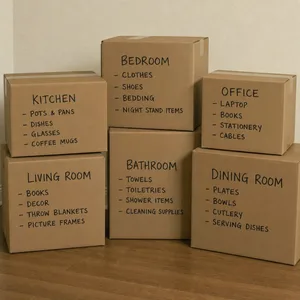
Pack belongings according to where they will go, not simply where you find them. This gives the unloading team useful instructions and saves you shifting boxes between rooms afterwards. Keep everyday items separate from things you can comfortably leave packed for a while.
For household removals, a consistent labelling system is more useful than elaborate colour coding nobody understands. Write the destination room and a short contents description on the top and side of each box. Mark fragile contents clearly, but protect them properly rather than relying on the label alone.

Build your packing routine around three priorities:
Pack occasional-use items first: start with decorations, spare bedding and belongings you will not need before moving.
Keep boxes manageable: divide heavy items between smaller boxes and cushion fragile pieces so they cannot shift freely.
Prepare an essentials bag: include chargers, toiletries, necessary medicines, keys, basic cleaning supplies and clothes for the next day.
Keep important documents and valuables under your own supervision. For home removals involving children, include familiar comfort items where they are easy to reach.
Give furniture its own preparation plan
Furniture removals need more preparation than deciding which items belong in which room. Measure bulky pieces and the narrowest points along their route, including doorways, landings and stair turns. Share awkward dimensions with the team before moving day so handling arrangements can be discussed.
When arranging furniture removal services, identify anything unusually heavy, delicate or difficult to dismantle. Do not assume every wardrobe or bed can be taken apart safely, or that reassembly is automatically included. Ask furniture removal companies how they want each item prepared.
For house furniture removal, empty drawers unless another arrangement has been agreed. Keep fittings in labelled bags, photograph complicated assemblies and store instructions somewhere accessible. Avoid attaching loose screws directly to surfaces where they could cause damage.
Check whether appliances need specialist preparation or disconnection, and arrange suitable help where required. Flag existing damage and delicate finishes so that everyone understands which pieces need particular attention.
When should you arrange clearance or storage?
Arrange clearance before finalising your moving inventory, and discuss storage as soon as you know your collection and delivery dates may not align. Both decisions affect what needs transporting and where it will go. Leaving them until the last moment creates extra sorting when your attention is already stretched.
House clearance removals and moving your chosen belongings are different tasks, so establish exactly what a provider has agreed to collect. Separate items to keep, donate, sell or remove, and make sure nobody mistakes one group for another.
If you need house removals and storage, ask how collection, storage and later delivery will be coordinated. Check access arrangements, packing requirements and how charges are calculated. Keep an inventory of stored boxes and avoid packing anything you may need urgently into an inaccessible load.
Storage should solve a timing problem, not become a substitute for deciding what you actually want in your new home.
Keep moving day simple and coordinated
Choose one person to answer questions and communicate decisions to the removal team. Walk through the property together before loading begins, pointing out fragile items, anything staying behind and access concerns. That short conversation is a useful final check against the agreed plan.
For house to house removals, prepare the destination as carefully as the collection address. Label rooms or provide a simple room list, especially if several bedrooms look alike. Tell the team where large furniture should go before boxes fill the available space.
Keep children and pets away from carrying routes, and leave entrances clear. Take a final look through cupboards, outdoor areas and storage spaces before handing over keys.
Once unloading is complete, check that belongings have reached the intended rooms and raise visible concerns promptly through the agreed process. Prioritise beds, basic washing facilities and somewhere to prepare food. You do not need to finish every box on the first evening.
Find local support that matches your move
Searching for “house removal near me” or “removals service near me” is a starting point, not a complete selection process. Check whether each provider covers both addresses and offers the practical help your move requires.
When comparing house removal companies near you, describe your property, inventory and access before requesting a firm commitment. The same applies when looking for home removal companies nearby: proximity alone does not establish availability or suitability.
For household removals near you, compare clear communication and written scope alongside price. Ask providers advertising house removals services to explain their offer in concrete terms. Moving removals are easier to coordinate when everyone knows what happens next.
A calmer move starts with clear decisions
You cannot control every delay, but you can reduce avoidable uncertainty. Sort early, share accurate information and confirm responsibilities before the day arrives. If you are considering Lucy & Phil, use your inventory and access notes to start a focused conversation about the support you need.
Lucy & Phil Property Solutions
Professional facilities management, commercial cleaning, property maintenance, and construction support across the UK.