
Efficient Strategies for Office Relocation Success
A successful office relocation keeps essential work running while people, furniture and equipment move into a usable new workspace. It depends on clear responsibilities, realistic scheduling and a detailed brief, not simply booking transport. If you’re exploring commercial and office removals with Lucy & Phil, these strategies will help you define your requirements, compare proposals and prepare your team.
What makes an office relocation successful?
An office relocation succeeds when the new premises are ready for work, essential items arrive where they belong, and disruption stays within agreed limits. Measure success by operational readiness rather than the moment the final box leaves the vehicle.
Start by appointing one internal move lead. Give that person responsibility for decisions, supplier coordination and updates, while naming a contact in each department. Without clear ownership, questions about desks, keys or access can delay larger tasks.
Define what must be available first: customer support, order processing or a shared meeting space, for example. Larger corporate removals may need separate phases for different teams. Smaller business removals still benefit from a written plan explaining who moves, when they move and what they need on arrival. Share those priorities with your chosen business moving company before agreeing the schedule.
Define the scope before requesting quotes
A useful quotation starts with an accurate inventory. Record furniture, equipment, storage contents and anything requiring special handling, then identify what will move, remain, be donated or need separate disposal arrangements. Avoid paying to relocate items nobody intends to use.
Prepare a brief covering:
Quantities and dimensions: Include bulky desks, meeting tables, cabinets and awkward equipment, not just an estimated number of boxes.
Handling requirements: Flag fragile items, dismantling needs and furniture that may not fit through doors intact.
Responsibilities: Specify who packs, supplies materials, disconnects equipment, reassembles furniture and removes packaging.
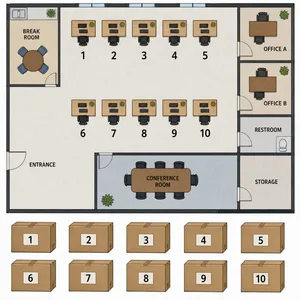
Destination details: Provide floor plans, room names and the intended position of larger items.
Commercial removalists can assess a defined scope more meaningfully than a vague request to move an office. Ask whether a survey is appropriate and what information the provider needs. Comparing business moving services becomes easier when every quotation addresses the same requirements.
How do you choose the right office moving company?
Choose an office moving company by checking its suitability for your premises, workload and timetable, then comparing written proposals on a like-for-like basis. Price matters, but unclear responsibilities or exclusions can leave your team doing work it expected the provider to handle.
Searching for ‘commercial moving services near me’ can build an initial shortlist. Searches for ‘business moving companies near me’ or ‘commercial movers near me’ are only a starting point, however: proximity alone does not establish suitability.
Ask commercial moving companies about their approach to planning, access restrictions, furniture handling and communication. Request evidence of relevant cover and clarify its terms, exclusions and any responsibilities placed on your business. Ask how delays or changes would be managed.
When comparing commercial removal companies and office relocation companies, check whether packing, dismantling, reassembly and unpacking are included or optional. Professional office movers should explain what they will do and what remains your responsibility. Your selected office removals company should also provide a named contact and a clear process for confirming changes.
Build the schedule around business continuity
Plan backwards from the point when staff must be working in the new premises. Before that can happen, desks need to be usable, essential systems available and access arrangements understood. Booking transport is only one part of that sequence.
Identify work that cannot pause and agree how it will continue. Options might include remote working, temporary workstations or moving departments in stages. Check that the alternative is workable rather than assuming everyone can simply use a laptop elsewhere.
Give your office relocation movers a priority order linked to business needs. Equipment for an essential team may need to arrive before archive boxes or spare chairs. Ask how the proposed loading and delivery sequence supports that order.
Confirm dependencies with your office relocation specialists, including building access, fit-out completion and technical support. A coordinated office relocation service needs realistic handover points, not several suppliers independently aiming for the same deadline.
Prepare furniture for its destination
Office furniture removals work best when every item has an agreed destination. Check the new layout before packing begins, including desk positions, storage requirements and space for people to move comfortably. Discovering that a large cabinet has nowhere suitable to go creates avoidable handling.
Use a consistent labelling system combining floor, room or zone, and workstation number. Put the same references on the floor plan. Colour coding can support the system, but written labels should remain clear without relying on colour alone.

For office furniture relocation services, confirm who dismantles each item, keeps fixings together and reassembles it. Photograph complicated configurations before taking them apart, and label components as a set. Ask commercial office movers about furniture requiring particular handling, rather than assuming every item can be treated identically.
Treat technology and information as separate workstreams
Office moving services and technical migration are not automatically the same thing. Establish who is responsible for shutting down, transporting, reconnecting and testing computers, network equipment and shared devices. Confirm whether those tasks sit with your own team, an IT provider or the removals provider.
Before moving, label equipment and cables by workstation or function. Keep a record of what travels together, and arrange any required backups with your technical team. Do not pack equipment until the person responsible has confirmed it is ready.
Keep sensitive paperwork and devices within an agreed handling process. Decide who packs them, who has access and how receipt will be checked. Office removal services should fit that process rather than determine it by default. Set aside time to test essential systems before staff return.
Coordinate access at both buildings
A clear route matters as much as a clear inventory. Check loading arrangements, lift availability, door widths, stairs and any restrictions set by building management. Confirm who will unlock each property and remain available throughout the move.
For commercial removals in London, investigate parking and loading arrangements early rather than assuming a vehicle can wait outside. Business removals in London may also involve shared entrances, booked goods lifts or restricted delivery windows. Confirm the requirements for your particular buildings.
When comparing office removal services in London, explain these constraints before accepting a schedule. Ask how access limitations affect the proposed approach, and identify who must arrange any permissions or reservations.
Share the final access instructions with your office removalists and internal contacts. Include arrival points, contact numbers and any route changes that would otherwise surprise the crew.
What should happen on moving day?
Moving day should follow an agreed sequence, with one person coordinating decisions and checks at each site. Your team and the movers need the same priorities, destination plan and contact details. Avoid issuing conflicting instructions directly to different crew members.
Use a short operational checklist:
Brief everyone before loading. Confirm priority items, access arrangements and anything excluded from the move.
Check labels and inventory. Resolve missing destinations before items disappear into a vehicle.
Keep essential supplies accessible. Separate keys, chargers, contact details and basic setup materials from general packing.
Direct placement at delivery. Use the floor plan so furniture reaches its intended position without repeated handling.
Inspect both premises. Check cupboards and shared spaces at departure, then record missing items or visible damage on arrival.
When assessing moving companies, moving-day coordination deserves as much attention as transport capacity. Agree how your provider will escalate problems, and keep decisions with the designated move lead.
Finish with a practical handover
The job is not complete merely because everything has arrived. Check workstations, shared equipment and essential supplies against your priorities, then give staff clear instructions for reporting problems. Keep one snagging list with an owner for each outstanding task.
Confirm arrangements for collecting reusable crates, removing packaging and completing any remaining furniture assembly. Review whether your commercial removals brief matched what actually happened; that record will be useful for future changes or another move.
For anyone considering commercial and office removals with Lucy & Phil, the next step is to prepare that brief. An accurate inventory, clear access information and agreed responsibilities give your chosen moving services provider a stronger foundation for planning—and give your business fewer uncertainties to manage.
Lucy & Phil Property Solutions
Professional facilities management, commercial cleaning, property maintenance, and construction support across the UK.