
Finding the Best Removal Company Nearby
The best removal company nearby is the one that can handle your belongings, access arrangements and moving schedule with a clear, written price. Searching for a ‘moving company near me’ is a useful starting point, but choosing well means looking beyond distance and headline costs. This article explains how to compare services, assess quotations and plan the details that matter, whether you are moving across London, elsewhere in the UK or overseas.
How do you find a reliable removal company nearby?
Find a reliable removal company by shortlisting firms that serve both addresses, checking their identity and relevant experience, and comparing written quotations for the same work. Ask how they assess your belongings, what protection applies and who will carry out the move. Government guidance recommends obtaining more than one quotation and considering service quality, availability, reviews, insurance and additional charges alongside price. (assets.publishing.service.gov.uk)
Start with the move itself rather than a long list of businesses. A few boxes from a ground-floor flat present a different job from a furnished family home with stairs, garden equipment and fragile furniture. Write down what you need before making enquiries, so each conversation starts with the same information.
When searching for ‘house removal near me’, add your postcode and destination area. Then look for evidence that the firm can manage your particular property and belongings. For moving companies in London, ask about both collection and delivery coverage rather than assuming a London address means every borough is served.
Give your shortlist a practical test:
Coverage: Will the company collect from your current address and deliver to your destination, including any separate storage stop?
Availability: Can it accommodate your likely date, and what happens if that date changes?
Service fit: Does it offer transport only, packing, furniture assembly or the additional help you need?
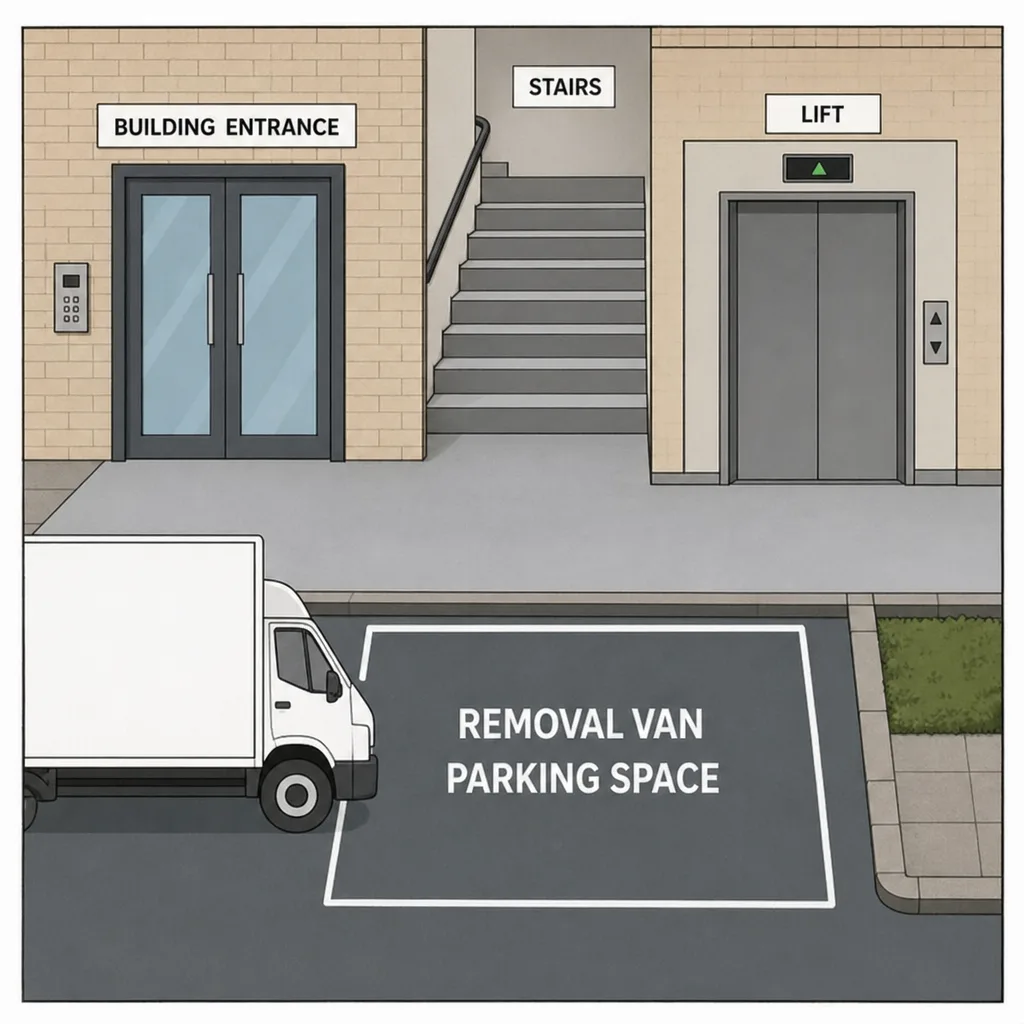
Access planning: Will it assess stairs, lifts, parking and the route between the vehicle and your front door?
Accountability: Who issues the contract, receives payment and answers questions before moving day?
Local removal firms deserve consideration, but proximity should be one factor rather than the deciding factor. Ask where the crew and vehicle will start their day and whether travel to your address is included. A nearby office is less useful than a realistic operational plan.
If you contact a moving agency, establish whether it performs the work or arranges another business to do it. Request the actual mover’s details before committing. Your aim is a manageable shortlist of suitable businesses, not dozens of prices based on different assumptions.
Match the service to the work you actually need
Before choosing between house movers, decide which tasks you want to keep and which you want someone else to handle. Separate packing, carrying, transport, dismantling, storage and unpacking in your enquiry. This helps you compare professional moving companies without mistaking a basic transport service for a complete move.
Broad descriptions such as goods moving services or house shifting services do not tell you precisely what is included. Ask for a task-by-task description instead. The useful question is not whether a firm offers a ‘complete solution’, but whether it will protect your sofa, pack your kitchen and rebuild your bed under the agreed price.
Transport-only and part-service moves
Consider a transport-only service if you are comfortable packing, have time to prepare and can make everything ready for collection. Tell the company whether you expect its crew to carry every item or whether you intend to help. Agree those responsibilities rather than leaving them to a conversation beside the van.
For a smaller move, ask about the crew as well as the vehicle. Explain any heavy furniture or awkward stairs before accepting a service described simply as van hire with a driver. Do not assume that carrying, protective wrapping or multiple trips form part of the booking.
A part-service arrangement may suit you better than either extreme. You could pack clothes and books yourself while requesting professional packing for mirrors, glassware or artwork. Ask the company to price that split explicitly, including the materials it will supply and when the packing will happen.
Packing, unpacking and furniture handling
If you want packing included, arrange an assessment that covers the contents of cupboards, lofts and other storage areas. Ask when the packers will arrive and what must remain available overnight. BSI’s consumer guidance highlights pre-move assessment, detailed written quotations and appropriate protective materials as useful elements of a well-planned removal. (bsigroup.com)
Searching for ‘home moving services near me’ may bring up providers with very different packages. Check whether unpacking means opening boxes, placing belongings in cupboards or simply removing packaging. Decide what would genuinely help you settle in, then request that service rather than an undefined upgrade.
For furniture movers, provide photographs and measurements of larger pieces. Ask which items need dismantling, who will do it and whether reassembly is included. Keep appliance disconnection, wall-mounted items and specialist equipment separate from ordinary furniture handling, and confirm whether another suitably qualified person needs to be involved.
London access deserves its own moving plan
For a house removal in London, treat the route from the vehicle to each room as part of the job. Describe the entrance, corridors, stairs, lift and available stopping place at both properties. Which? advises checking access and parking because vehicle dimensions, road restrictions and unloading arrangements can affect a removal. (which.co.uk)
Do not stop at ‘second-floor flat’. Explain whether there is a lift, whether it can be booked and whether large furniture will fit inside it. Send photographs of tight turns, shared entrances and any route that is difficult to describe accurately.
Ask your building manager about moving arrangements before the quotation is finalised. Request any requirements concerning lift protection, loading areas, permitted working hours or contractor access in writing. Pass those instructions to the removal company so they can be reflected in its plan.

Central London collections and deliveries
When comparing removals in Central London, establish where the vehicle can legally stop and whether space needs to be reserved. Check the relevant council’s current process rather than relying on a previous move. For example, Islington and Southwark publish different arrangements and application requirements for moving-related parking. (islington.gov.uk)
Ask who will apply, who will pay and what happens if the expected space is unavailable. Keep that responsibility visible in the quotation. Do not assume a resident’s parking permit automatically answers every question about a removal vehicle.
Also ask whether any applicable road-user or emissions charges are included. Transport for London distinguishes between vehicle categories and emissions schemes, so the relevant position depends on the vehicle being used. Request confirmation from the operator rather than adding an assumed charge to your budget. (tfl.gov.uk)
South London and South West London moves
When assessing removal companies in South London, describe the actual property rather than relying on the neighbourhood name. A terraced house, a converted flat and a managed apartment block call for different access discussions. Ask the estimator to explain how the proposed crew and vehicle suit your address.
The same applies when comparing removal firms in South West London. Request a plan for both ends of the journey, especially where one property has straightforward access and the other does not. A short drive should not distract from stairs, a long carrying route or furniture that needs careful manoeuvring.
For home removals in South London, send one access summary covering both properties. Include contact details for anyone controlling gates, loading areas or lifts. When evaluating home removals across London, this shared briefing gives each company a fair chance to quote for the same job.
What should a removal quotation include?
A removal quotation should identify the work, addresses, moving date or assumptions, price, payment arrangements and circumstances that could change the bill. It should also explain the company’s liability, any protection offered, cancellation arrangements and complaints procedure. Ask for a breakdown that makes packing, transport, storage and possible additional charges easy to compare. (which.co.uk)
Avoid comparing the bottom line before comparing the scope. One quotation might include packing materials and dismantling; another might cover loading and transport only. Put the documents side by side and identify those differences before deciding which offers better value.
Give every estimator the same information
Prepare a room-by-room inventory and include spaces that are easy to overlook. Mention the loft, shed, garage, balcony and any belongings held elsewhere. Show furniture that needs special attention, including items you are unsure will fit through the new entrance.
Ask whether an in-person or video survey is appropriate for your move. Government guidance recommends a visit before quotation where access is difficult or unusual items are involved. Explain anything that photographs or a brief call might fail to show. (assets.publishing.service.gov.uk)
During the assessment, walk through what is staying as well as what is going. If you are selling furniture or waiting for a delivery, flag that uncertainty. Request an updated quotation when the agreed inventory changes rather than assuming the original price still applies.
Compare the details, not just the total
Use a comparison sheet to capture what each firm has actually promised. Leave blanks where information is missing and ask for clarification. Do not fill those gaps with your own assumptions, even if the salesperson sounded reassuring.
Quotation detail What to establish before booking Inventory and service Which belongings, rooms and tasks are included? Crew and vehicle What team and vehicle arrangement is proposed? Packing Who packs, which materials are supplied, and when does packing happen? Furniture work Which pieces will be dismantled and reassembled? Access Are stairs, lifts, carrying distances and parking arrangements recorded? Timing What arrival window, loading plan and delivery arrangement apply? Additional charges What triggers waiting time, overtime, extra trips or revised pricing? Payment and changes What deposit, balance, cancellation and postponement terms apply? Protection What liability or insurance terms, exclusions and claim procedures apply?
Clarify how time-based charges work. Ask when charging starts and stops, whether travel time is included and how delays are recorded. For a fixed quotation, ask which changes or circumstances would allow the price to be revised.
Key collection deserves a specific conversation. Tell the firm if access to the destination depends on another transaction or someone handing over keys. Request a written explanation of what happens if the crew arrives before you can enter.
Finally, ask how long the quotation remains valid and what secures the booking. Save the accepted version alongside the terms and any later amendments. You should be able to identify the agreement without searching through a chain of informal messages.
Check the business and the people behind the booking
Before paying a moving company for hire, establish exactly who you are contracting with. Request its trading name, contact details and the business identity shown on the quotation. Compare those details with the invoice and payment instructions, and ask about anything that does not match.
For a limited company, Companies House provides access to information including its registered address, status, filing history and officers. Use that information to check identity, not as a substitute for assessing the proposed service. Registration details alone do not answer whether the crew, equipment or contract suits your move. (gov.uk)
If your search uses a particular name, such as ‘Moving Home Company Ltd’, check the exact spelling and company details. Do not assume businesses with similar names are connected. Make sure reviews, quotations and any claimed memberships relate to the same organisation you intend to book.
Read reviews for useful detail
Use reviews to investigate the parts of the service that matter to you. Look for descriptions of packing, punctuality, furniture handling, communication and the handling of unexpected problems. Government guidance specifically recommends considering online reviews and how issues are resolved. (assets.publishing.service.gov.uk)
Read the company’s responses as well as the customer comments. Look for clear explanations and a willingness to address the actual complaint. If something concerns you, ask about it directly and judge the answer alongside the rest of your checks.
Ask friends or neighbours about comparable moves rather than requesting a name alone. Find out what was included, whether the final bill matched the agreement and what they would do differently. Their experience can help you frame questions, but your own move still needs its own assessment.
Verify memberships rather than trusting a logo
If a firm claims British Association of Removers membership, check that claim through the association or the Approved Code Scheme. The Chartered Trading Standards Institute’s scheme describes BAR membership checks and inspections covering areas such as premises, vehicles, staff, procedures and contractual arrangements. (approvedcode.tradingstandards.uk)
Ask which complaints process applies and where to find it. Treat membership as one piece of evidence alongside the quotation, communication and operational plan. A badge should help you verify a claim, not end your enquiries.
If you are comparing a moving company in London, UK, with a provider based farther away, apply the same checks to both. Ask who your coordinator will be and whether another crew or subcontractor may attend. Request written confirmation of who remains responsible for delivering the agreed service.
Lower the bill without stripping out essential help
If you are looking for cheap removals in London, start by deciding what you can remove from the workload. Sort belongings before the assessment and identify furniture you no longer want. Ask for the quotation to reflect what you will actually move rather than paying to transport items you intend to discard.
For searches such as ‘cheap removals near me’, compare the complete cost of an achievable service. Ask whether packing materials, travel, parking arrangements and furniture work are included where relevant. Which? recommends requesting a breakdown because these elements and possible overtime charges affect meaningful comparisons. (which.co.uk)
Consider these ways to adjust the scope:
Pack selected rooms yourself: Ask the company to price fragile-item packing separately, so you can decide where paid help is most useful.
Reduce the inventory early: Confirm what you will sell, donate or keep before asking for a revised quotation.
Discuss date flexibility: If you genuinely have options, request prices for those dates without assuming a particular day will be cheaper.
Prepare the access information: Give the estimator enough detail to plan the right service rather than leaving important work unassessed.
Separate optional extras: Price unpacking, packaging collection and other conveniences individually before choosing them.
Be realistic about your own time. Self-packing is only a useful saving if you can finish it to the agreed standard before the crew arrives. Ask what happens if boxes or furniture are not ready, and decide whether the extra responsibility is worthwhile.
Cheap removals should still come with an understandable agreement. If a price is noticeably lower than the others, ask the company to explain the difference in scope and assumptions. A clear answer is more useful than either dismissing the offer immediately or accepting it without checking.
Understand protection before anything is packed
Ask what happens if belongings are lost or damaged, rather than relying on the phrase ‘fully insured’. Request the relevant documents and clarify whether the arrangement is insurance, contractual liability or another form of protection. Your existing contents policy may also have moving-related cover, but conditions, limits and exclusions need checking with the insurer. (moneysavingexpert.com)
Explain any particularly valuable or fragile items before booking. Ask how values should be declared and whether individual items or owner-packed boxes are treated differently. Which? notes that removal companies may limit liability and that customers should check both cover and the time allowed for claims. (which.co.uk)
Use specific questions to uncover gaps:
What protection applies during packing, loading, transport and unloading?
Does the arrangement change if belongings remain in a vehicle overnight?
What applies during storage or handling by another company?
Are there limits for individual items, boxes or the whole consignment?
What information and evidence would be needed to report damage?
What notification deadlines and exclusions appear in the terms?
Keep your own record of important items and their condition. Take clear photographs before packing and retain relevant receipts or valuations where you have them. Ask the mover how its inventory will describe those belongings, especially if they are entering storage or travelling overseas.
Set aside documents, medication and other things you need to keep personally accessible. Discuss any valuables you plan to transport yourself so they are not accidentally packed. Make a clearly labelled area for belongings that are outside the removal company’s agreed inventory.
If the wording remains unclear, ask the company or insurer to explain it in writing before accepting. Do not guess what a technical phrase means or assume two providers offer identical protection. Choose with a clear understanding of the arrangement, not simply because a quotation contains an insurance logo.
Plan long-distance and international moves separately
For long distance removals, ask for a collection and delivery plan rather than a journey time alone. Establish whether belongings travel directly, whether the vehicle carries other consignments and whether anything is transferred or stored along the way. Request those details as part of the proposed service.
A search for ‘long distance removal companies near me’ should lead to questions about destination coverage and scheduling. Ask who will unload, how delivery is confirmed and what happens if either property becomes unavailable. Give the firm a destination contact if you cannot be present throughout.
Prepare for the period between collection and delivery. Keep the belongings you will need during that interval separate from the main load. Ask when you will receive updates and whom to contact if your own travel arrangements change.
Clarify whether the delivery appointment is a firm commitment or an expected window. Avoid arranging essential appointments around an assumption the company has not confirmed. Where there are several stages, request a short written schedule showing who is responsible for each one.
International moves need destination-specific checks
If you need a removal company for a London–UAE move, ask about the complete route and the organisation handling delivery at the destination. Establish who coordinates documentation, clearance, storage and final unloading. Request a clear list of included services and charges that remain outside the quotation.
Do not use general packing advice as a substitute for destination requirements. FIDI publishes country-specific customs guidance and recommends checking applicable restrictions with the moving company for both the origin and destination. Confirm the current requirements before deciding what to ship. (fidi.org)
Ask for an itemised shipping inventory and review it before agreeing that it is accurate. Discuss anything unusual, newly purchased or potentially restricted rather than adding it to a box unnoticed. Keep important documents accessible and request copies of the paperwork you may need during the journey.
For international relocation services from London, also separate the shipment from any broader support being advertised. Ask whether accommodation help, settling-in assistance or other relocation tasks are actually included. A removals quotation should make those boundaries clear rather than leaving you to infer them from the company’s description.
Treat removal and storage as a complete arrangement
If you search for ‘removal and storage near me’, ask for the full sequence: collection, storage entry, time in store, release and final delivery. Request separate costs for each stage and ask which assumptions could change them. Which? recommends identifying storage costs within the quotation breakdown when comparing removal services. (which.co.uk)
Start with access. Tell the provider whether you want everything stored until the next move or expect to retrieve individual items. Ask how visits work, whether advance notice is needed and whether access or handling carries a charge.
Make the storage enquiry specific:
Who operates the facility, and who is your contractual contact?
How will the inventory be recorded when belongings enter and leave?
What security and environmental arrangements are provided?
What protection applies while goods are stored and handled?
Is there a minimum term or notice period for release?
What does delivery out of storage include?
Request a packing plan that matches your likely access needs. If you may need paperwork, seasonal clothing or equipment before the main delivery, identify it in advance. Ask whether those items can be kept accessible rather than buried within the consignment.
Also discuss uncertainty over the final address or delivery date. Ask how extensions are agreed and how much notice the provider needs to arrange a vehicle and crew. Keep those answers with the quotation so that a temporary solution remains manageable if your plans change.
Before committing, compare the combined arrangement with any alternative you are considering. Include collection and redelivery, not just the advertised storage rate. The useful figure is the expected cost of getting your belongings from your old home into the right rooms at the end.
Business moves need a plan for getting back to work
When comparing commercial movers in London, begin with the order in which the workplace needs to become usable. Identify essential equipment, furniture, records and shared areas, then explain what must be available first. Ask the provider to propose a sequence that matches those priorities.
Give the mover a destination layout and consistent labels. A label such as a desk or room identifier is more useful than an employee’s name if the new arrangement is changing. Assign someone to answer placement questions so the crew does not have to interrupt several people for the same decision.
Agree responsibility for the tasks around the physical move:
Who prepares and packs each department’s belongings?
Who disconnects, transports and reconnects IT equipment?
Who manages confidential records and access arrangements?
Who approves the layout and checks furniture placement?
Who confirms that each work area is ready to use?
Keep transport and technical installation separate unless both are expressly included. Ask whether specialist suppliers need their own access window and whether the removal schedule leaves room for their work. Do not assume equipment will be operational simply because it has arrived.
If the move must happen outside normal working hours, request that timing in the quotation. Give building managers the proposed schedule and seek confirmation of any contractor requirements. Finish with a handover plan that identifies outstanding tasks, the person responsible and how follow-up work will be arranged.
How can you prepare for a smoother moving day?
Prepare for moving day by confirming the written plan, finishing your agreed packing, keeping access routes clear and separating belongings you need personally. Give the crew a brief tour before loading and explain the destination layout before unloading. Which?’s moving checklist recommends packing non-essential items ahead of time, labelling boxes by destination room and preparing moving-day essentials. (which.co.uk)
Turn the booking into a short working plan. Keep the quotation and coordinator’s details available on your phone and in another accessible place. Share the essential arrangements with anyone who will be opening doors, collecting keys or meeting the vehicle.
In the run-up to the move
Work through your inventory and tell the company about meaningful changes. Reconfirm parking arrangements, building access, packing responsibilities and furniture work. If you cannot complete a task you agreed to handle, raise it before the crew arrives and request a written adjustment.
Use this final preparation checklist:
Confirm the addresses and contacts. Include flat numbers, entry instructions and the person meeting the crew at each end.
Review the schedule. Check the arrival window, packing arrangements and any uncertainty around destination access.
Prepare your essentials. Keep medication, chargers, documents, toiletries, refreshments and a change of clothes accessible.
Label for the new layout. Use destination room names, adding a brief contents description where helpful.
Separate excluded belongings. Clearly identify anything staying behind or travelling with you.
Check shared arrangements. Reconfirm lift bookings, loading access and instructions from building management.
Make a simple furniture placement plan rather than deciding everything during unloading. Identify the larger pieces first, then leave room for boxes to be placed without blocking circulation. Share any uncertainty with the crew leader before carrying begins.
During collection and delivery
At collection, walk through the property with the crew leader and point out fragile pieces, existing damage and anything outside the agreed load. Ask how questions or changes should be raised during the job. Keep one person available to give consistent instructions.
Before leaving, check cupboards, storage areas and the rooms that were loaded first. At the destination, explain your labels and show the crew where larger furniture belongs. Keep children, pets and visitors away from the active carrying route, and avoid moving boxes into spaces the team still needs.
Inspect belongings as you reasonably can during delivery and record any concerns clearly. Read the delivery paperwork before signing, noting anything that needs to be recorded. If you discover damage, follow the company’s notification process promptly and keep photographs, correspondence and relevant packaging.
Raise problems with the removal company first, stating what happened and what response you are seeking. BSI’s consumer guidance recommends giving the firm an opportunity to resolve a complaint, then approaching the relevant trade association or seeking consumer advice where necessary. (bsigroup.com)
Choose the clearest workable plan
By the time you are ready to book, your shortlist should be easier to judge. You should know who is doing the work, what they will handle, how both properties will be accessed and what the agreed price covers. Any remaining uncertainty should be something you have consciously accepted, not an unanswered question hidden in a sales conversation.
If you began with ‘home movers near me’, use this final check to move from searching to choosing. Compare each firm against your actual inventory, access conditions and priorities. A polished website is useful for finding information, but your decision should rest on the proposal in front of you.
Ask yourself whether the company has listened carefully and answered practical questions directly. Check that important promises have made it into the written agreement. If the plan still depends on assumptions about parking, packing or delivery, resolve those before paying to secure the booking.
The right removal company is not necessarily the nearest or cheapest. It is the business offering a credible plan for your belongings, with clear responsibilities and terms you understand. Start with a consistent brief, compare like for like and choose the team whose written proposal gives you the strongest reason to feel prepared.
Lucy & Phil Property Solutions
Professional facilities management, commercial cleaning, property maintenance, and construction support across the UK.